Machine-by-machine
Know what each class does well.
The categories overlap, but they are not interchangeable. Use these profiles to eliminate poor fits before comparing individual models or prices.
Choose it when the work starts below ground.
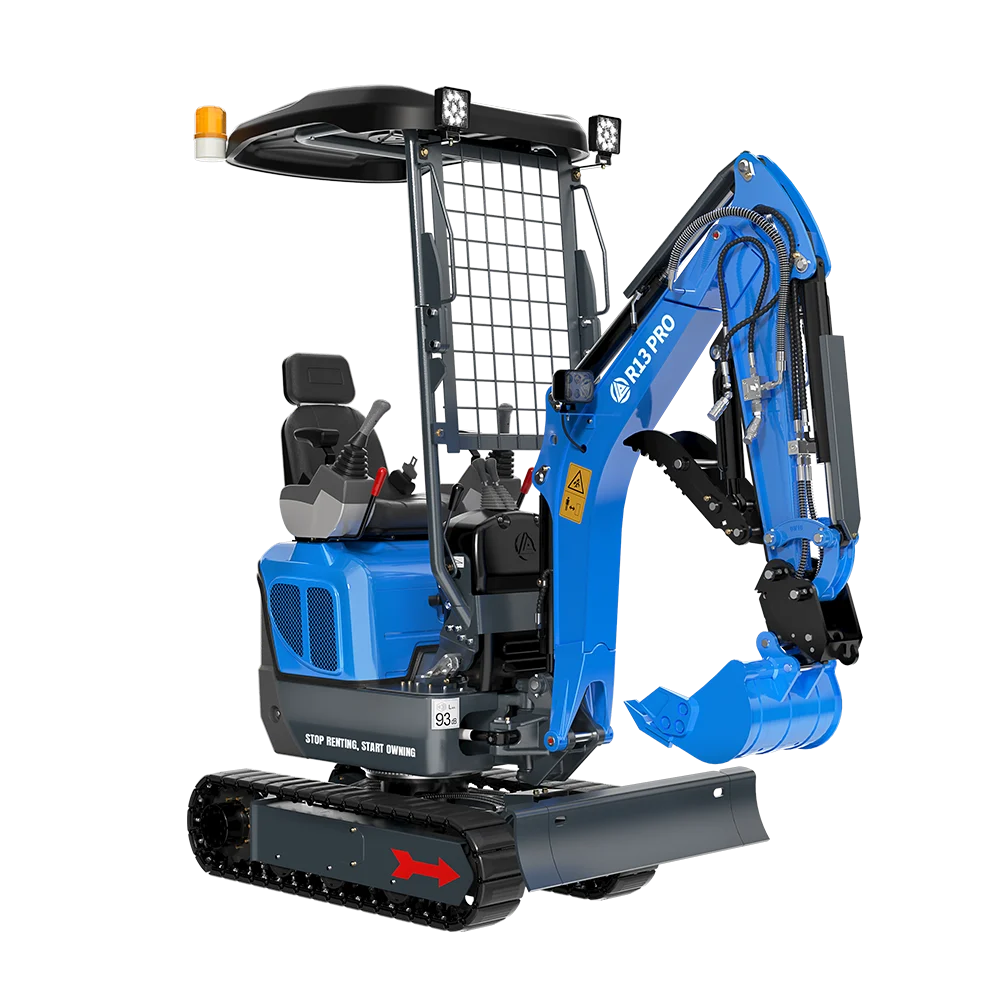
Mini excavator
A mini excavator places the bucket with far more control below ground level than the other machine classes. It is usually the first choice for drains, service trenches, small foundations, stump and root work, and digging beside existing structures.
The digging area is confined, the spoil can remain within the machine’s swing radius, and depth, reach and bucket control matter more than travel speed.
Most of the cycle is carrying spoil over distance, loading high-sided trucks or moving bulk material around a yard. Those jobs usually need a dumper or loader beside the excavator.
- Digging depth at the required reach
- Working width with the tracks and blade positioned
- Tail swing and boom swing beside walls
- Auxiliary flow for a thumb, breaker or auger
Choose an excavator when digging is the bottleneck. Add a carrying machine when the spoil needs to travel farther than the excavator can place it efficiently.
Explore mini excavator models ↗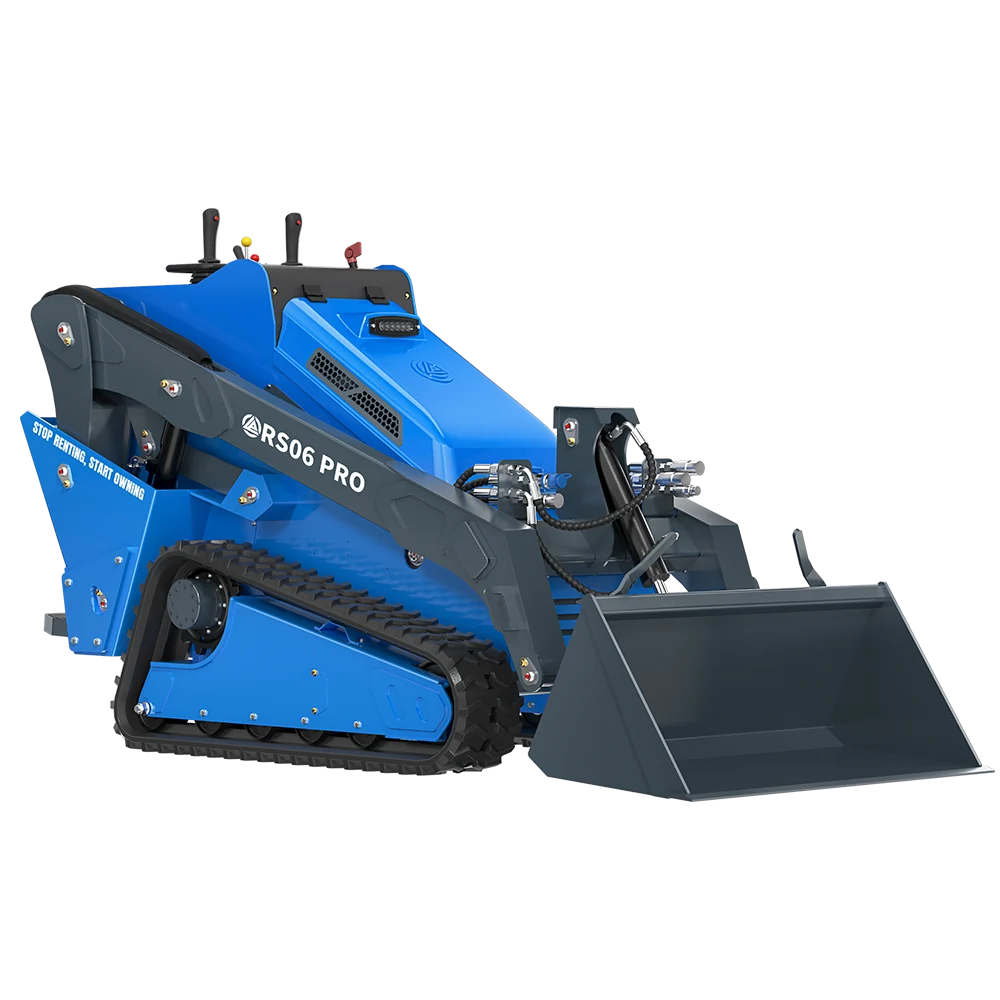
Choose it as a compact attachment carrier.
Compact skid steer
A compact skid steer earns its place by changing jobs quickly. With the correct carrier and hydraulics, one machine can load, grade, sweep, auger, trench, grapple and move pallets within a restricted work area.
The work involves short loading cycles, surface grading, cleanup or several powered attachments that will be changed frequently.
The job needs deep excavation, comfortable long-distance travel, heavy pallets at height or repeated crossings over severe steps and rough grade transitions.
- Rated operating capacity with the attachment
- Hinge-pin height and usable dump clearance
- Attachment plate and locking system
- Auxiliary flow, pressure, return and electrical controls
Choose the skid steer when attachment use creates more value than digging depth or travel comfort. Build the specification around the tools, not only the engine.
Explore compact skid steer models ↗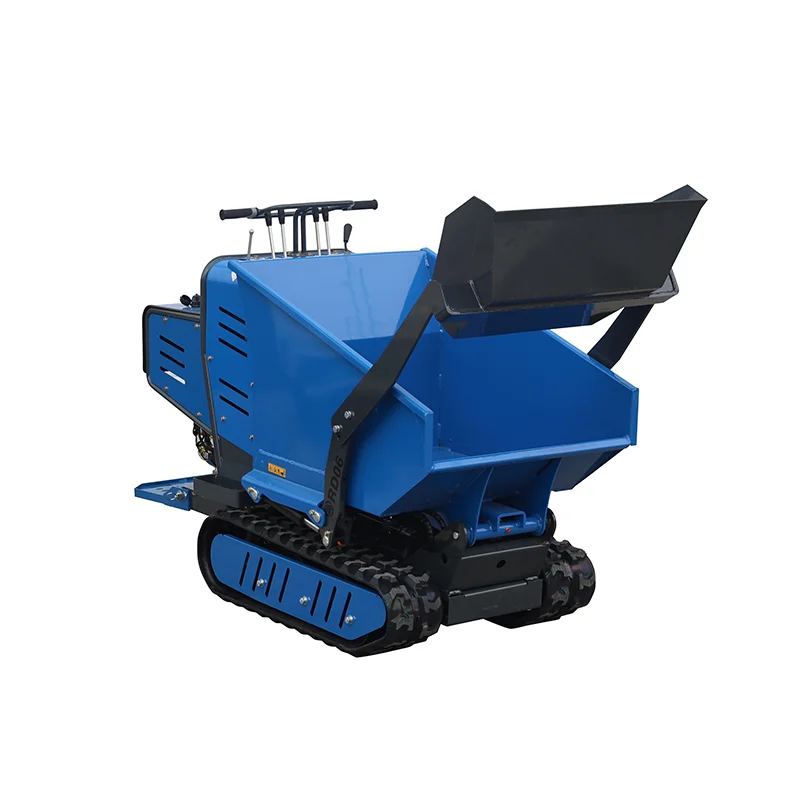
Choose it when carrying is the slow part.
Mini dumper
A mini dumper is a narrow point-to-point carrier. It can replace repeated wheelbarrow trips through gates, paths and occupied sites, but it still needs a practical loading method and enough room to tip safely.
Soil, aggregate, mulch or debris must travel through restricted access and another machine or crew can load the body efficiently.
The work needs digging, fine grading, precise material spreading or a raised and offset dump on uneven ground without a documented stability margin.
- Rated payload and body volume for the material
- Loaded braking and steering on the real route
- Front, swivel or high-tip clearance
- Track retention, linkage play and service access
Choose a dumper when travel between the loading and discharge points consumes the crew’s time. Dump geometry can matter more than an extra capacity claim.
Explore mini dumper models ↗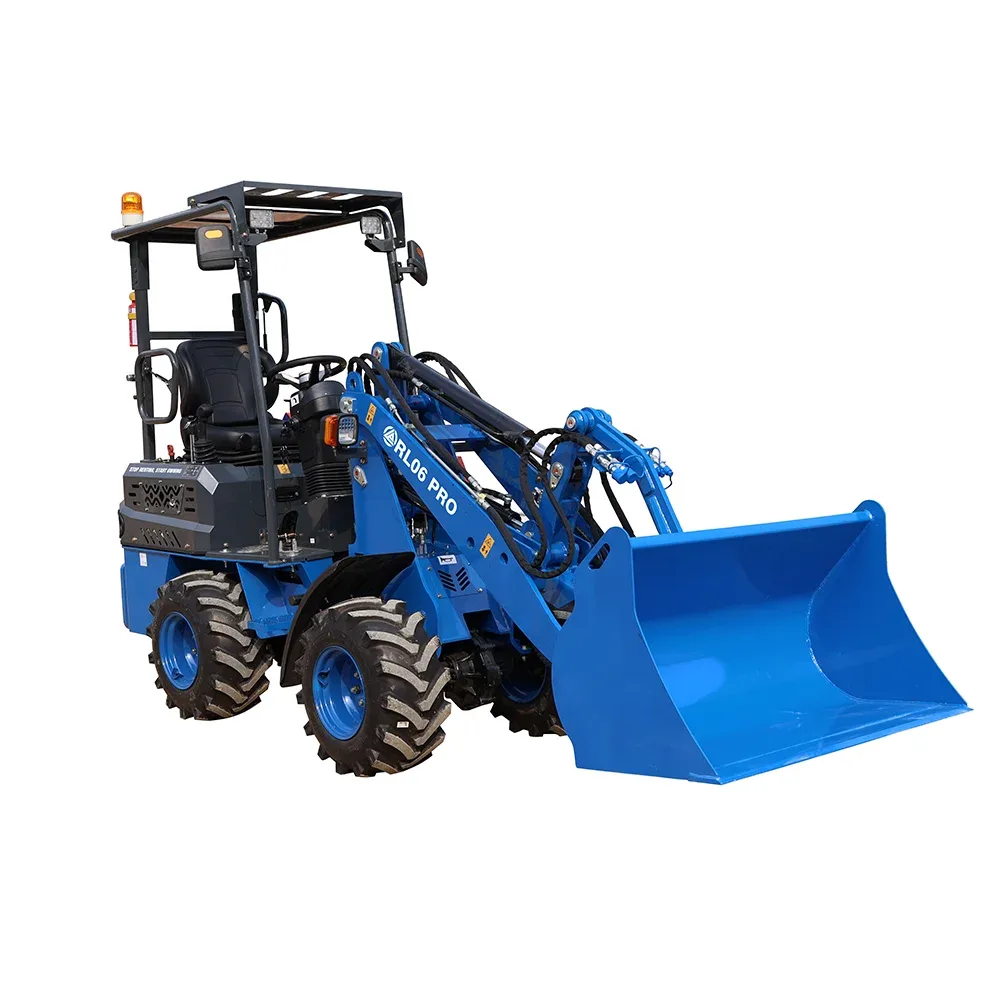
Choose it for repeated loading and travel.
Compact wheel loader
A compact wheel loader combines bucket capacity, higher loading reach and more comfortable travel around a yard, farm or property. It is especially useful when the machine repeatedly returns to a stockpile and loads trucks, bins or pallets.
The work involves frequent load-and-carry cycles, pallet handling, yard travel or loading over a side that smaller stand-on machines cannot comfortably reach.
The site is dominated by deep digging, zero-turn manoeuvres, very soft ground with the wrong tyre package or finish grading that needs a different steering geometry.
- Load chart at the required height and reach
- Dump clearance for the actual truck or hopper
- Tyre size and tread for wet-season ground
- Hose and wiring clearance through articulation
Choose a wheel loader when travel speed, lift height and repeated loading pay for the larger footprint. Specify the tyre package as carefully as the engine.
Explore compact wheel loader models ↗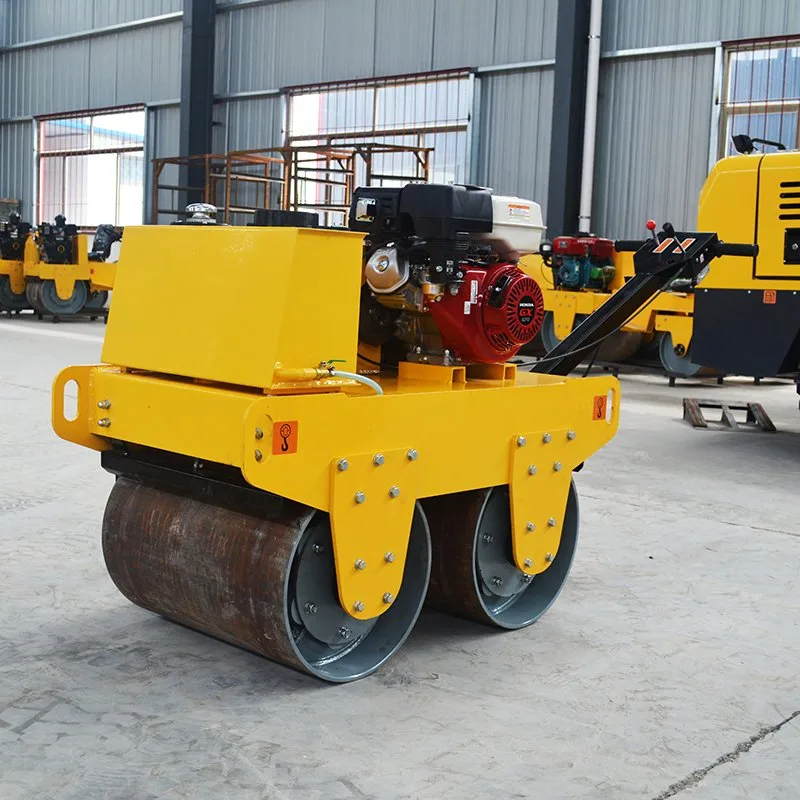
Choose it only for recurring compaction.
Compact road roller
A compact roller is a specialised finishing machine. It can make sense for contractors repeatedly preparing paths, driveways, sub-base or asphalt, but its result depends on the material, moisture, lift thickness, drum and operating method.
Compaction is a recurring part of the business, the areas are large enough for efficient passes and a competent operator can follow the project’s compaction plan.
The work is occasional, confined to small repairs, located beside unsupported edges or uses material and moisture conditions that the selected drum cannot compact properly.
- Smooth, padfoot or combination drum
- Drum width, vibration data and water system
- Material, moisture and lift-thickness requirements
- Edge visibility, reversing controls and transport weight
Choose a roller only when the utilisation supports a dedicated machine. For occasional work, renting the correct roller is usually more flexible than owning the wrong one.
Explore compact road roller models ↗The selection process
Turn the job into a machine specification.
Open each question to turn the work, site and support plan into specifications you can compare.
01What work cycle repeats most often?
Write down what the machine will do most often: dig, load, carry, lift, spread or compact. Include where the material starts, where it ends and how many times the cycle repeats. Buy for that routine work—not the most ambitious one-off project.
02What does the complete access route look like?
Record the narrowest opening, overhead clearance, turning space, side slope, ramp, step and grade break from unloading point to work area. Measure with the working attachment fitted and tracks in the required position.
03Which track or tyre setup suits the ground?
Wet clay, loose stone, soft fill, finished lawns and steep driveways need different track or tyre choices. A machine can fit through the gate and still lose traction, become unstable or damage the surface beyond it. Test the exact configuration on representative ground.
04What is the usable capacity in the working position?
State the real material, load weight, lift height and reach. Include the attachment. Maximum lift force, tipping load and rated operating capacity are different measurements and should not be substituted for one another.
05Which attachments must the carrier support?
List the bucket, forks, auger, grapple, breaker, trencher or compactor you expect to use. Confirm coupler standard, attachment weight, hydraulic flow, pressure, return circuit, hose routing and electrical controls.
06How will parts, repairs and downtime be handled?
Identify filters, belts, batteries, hoses, seals, switches, tracks, tyres and engine parts before purchase. Mechanical ability can reduce some downtime, but it does not replace correct manuals, safety systems, documented specifications or obtainable parts. Daily commercial work puts more value on local stock and fast technical help.
07How will the machine be transported and stored?
Use operating weight with fuel and the working attachment—not a bare-machine figure. Check current transport requirements plus trailer, tow-vehicle, ramp and tie-down ratings. Plan ventilated storage, drainage, cleaning and corrosion inspections for local rain, mud, humidity and salt exposure.
Real work sequences
One machine rarely performs every step equally well.
Write the job as a sequence. When two steps consume most of the time, a two-machine workflow—or one owned machine plus a rental—can be more productive than forcing one carrier to do everything.
Drainage and trenching
Start with the excavator because depth and placement control the job. Add a mini dumper when spoil must pass through a gate or travel beyond the excavator’s swing area.
Landscaping and hardscape
A compact skid steer handles attachments and short loading cycles. A dumper protects productivity on narrow routes, while a roller is better rented when compaction is only an occasional final step.
Farm and property work
A compact wheel loader suits repeated movement of aggregate, soil, feed or pallets around a larger property. Use a dumper instead when the route is too narrow for the loader.
Driveway rehabilitation
An excavator or skid steer can remove and shape material, but neither replaces proper compaction. Match the roller to the material and rent it if driveway work is not recurring.
Climate and ground
Match the machine to the conditions where it will work.
Hot weather, freezing conditions, heavy rain, dust and altitude place different demands on engines, cooling systems, hydraulics, batteries and operators. Inspect the systems relevant to your climate and run the machine until fully warm before testing simultaneous travel, lift and attachment functions.
Wet-season performance depends on more than “tracks versus tyres.” Track width, tread, ground pressure, machine balance and the material below the surface all matter. Ask for a demonstration on ground similar to the real job, within the manufacturer’s operating limits. Finished lawns, soft shoulders and saturated clay should be treated as separate conditions.
Owner demonstrations show that some compact tracked machines can pitch abruptly over rocks, steps and grade changes. Walk the complete route and test representative transitions slowly under competent supervision.
Corrosion resistance, connector sealing and long-term weather durability remain configuration-specific. Inspect these areas and follow the exact maintenance guidance rather than assuming that one short demonstration proves suitability for your operating environment.
Buying direct
Convert the listing into one exact machine.
Supplier pages often combine engines, capacities, attachments and even multiple models. A familiar model code does not guarantee that two suppliers are offering the same machine. The quotation and pro forma invoice should identify the exact configuration you will receive.
- Exact model, engine, emissions version, pump, valve and serial-number format
- Operating weight and dimensions with the working attachment
- Rated capacity, lift chart or digging envelope for the intended job
- Auxiliary hydraulic flow, pressure, coupler and attachment controls
- Crate dimensions and gross weight shown in a dated video
- Cold start, hot restart, operation within rated limits, leak check and attachment test
- Warranty coverage, exclusions, labour, freight and claim procedure
- Parts book, service schedule, wiring diagram and hydraulic diagram
- Starter spares package with filters, belts, seals and common service parts
- Itemised freight and destination costs to the agreed delivery point
Supplier age, response time, store rating and delivery record can help narrow the field. They do not establish the durability of a specific machine. Treat a low listing price as the beginning of the specification process, not the final comparison.
Safe operation
Small equipment still needs full-size discipline.
Specifications and videos do not replace the exact machine’s operator manual, load chart, maintenance instructions or competent training. Use approved attachments and counterweights, keep within rated capacity at the actual reach and height, and stop when traction, visibility, ground support or weather falls outside the permitted conditions.
- Inspect restraints, interlocks, guards, alarms, emergency stop, parking brake and ROPS or FOPS before use
- Keep bystanders outside swing, reversing, dumping, lifted-load and attachment hazard zones
- Identify overhead and underground utilities before digging, augering, lifting or compacting
- Carry loads low and follow the manual’s slope, travel and dumping instructions
- Isolate stored hydraulic energy and mechanically support raised equipment before service
- Use the exact load chart for forks, suspended loads and attachments at reach
- Reassess wet slopes, soft shoulders and excavation edges after heavy rain
Ownership decision
Buy when the machine solves a repeated bottleneck.
Ownership is easiest to justify when the machine removes recurring labour, rental delays or subcontractor scheduling problems. A low-hour machine can still be useful, but it may be expensive idle equipment after insurance, storage, maintenance and tied-up capital are included.
Repeated, predictable work
The machine has a clear weekly or monthly role, the attachments will be used, transport is solved and repairs can be supported.
Occasional or specialised work
The job is infrequent, requires a larger machine, needs an experienced operator or would leave the purchased machine idle for long periods.
Your shortlist
Write these answers before comparing prices.
Expand each question for the measurements and decisions that belong in your shortlist.
01What repeated movement must the machine perform?
Write the job as dig, lift, load, carry, place, grade or compact. Identify the step that consumes the most labour or creates the most delay. The machine class should remove that recurring bottleneck rather than simply cover the greatest number of occasional tasks.
02What is the narrowest width, lowest height and sharpest turn?
Measure from the unloading point to the work area, including gates, walls, eaves, branches, corners and the loaded exit path. Include the working attachment, blade, expanded tracks and swing or articulation envelope—not only the machine’s transport width.
03What happens to the ground after heavy rain?
Identify wet clay, soft fill, finished lawns, loose stone, steep driveways and unsupported shoulders. Compare tread, track width, ground pressure, clearance and recovery options for the exact configuration. A dry, level demonstration does not answer a wet-season access question.
04What real load must move, and to what height or reach?
Record the material, weight, load centre, required height, horizontal reach and attachment. Use the correct load chart or rated operating data. Maximum force, tipping load and rated capacity describe different conditions and should not be substituted for one another.
05Which attachments are essential on day one?
Separate income-producing tools from optional accessories. Confirm the mounting interface, attachment weight, hydraulic flow, pressure, return or case drain, couplers, electrical controls and hose routing for every essential tool.
06Which parts and repairs can be handled locally?
Identify filters, belts, batteries, hoses, seals, switches, undercarriage parts, engine components and hydraulic specialists before ordering. Confirm who can diagnose a fault and how long critical parts take to arrive. A brand name or supplier rating is not a local support plan.
07What transport setup and current requirements apply?
Use the operating weight with fuel and the working attachment. Check the tow vehicle, hitch, trailer, axles, tyres, brakes, ramps, deck and tie-down ratings, then confirm current legal requirements for the route. Include loading height, width and load distribution.
08How many productive hours will the machine complete each month?
Estimate realistic working days and include finance, storage, maintenance, transport and downtime. Ownership is easiest to justify when the machine repeatedly replaces labour, rental delays or subcontractor scheduling. Rent or subcontract low-frequency specialist work.
Useful field reports
Longer-use examples include an 800-hour mini excavator, an 80-hour compact skid steer, a 105-hour mini dumper and a 105-hour compact wheel loader. The compact-machine buying checklist covers the transaction and inspection in more detail.