Before comparing models
Three shortcuts lead to the wrong machine.
The classes overlap enough to make an unsuitable machine look capable during a short demonstration. Eliminate these comparison errors before reading specifications.
Comparing headline force
Excavator breakout force and skid-steer lifting force describe different actions. Neither number proves that the machine can safely carry a pallet, lift at reach or remain stable on the intended ground. Compare the exact working envelope instead.
Assuming an attachment changes the carrier
A skid-steer backhoe does not gain the full swing, reach and positioning of an excavator. An excavator grading bucket does not gain the travel speed and repeated loading cycle of a skid steer. Attachments extend a machine; they do not replace its basic geometry.
Measuring only machine width
The narrowest gate is one checkpoint. The machine must also turn, cross grade changes, clear overhead obstacles, work with the attachment, avoid finished surfaces and exit with the load. The full route eliminates more poor choices than the brochure width.
Working differences
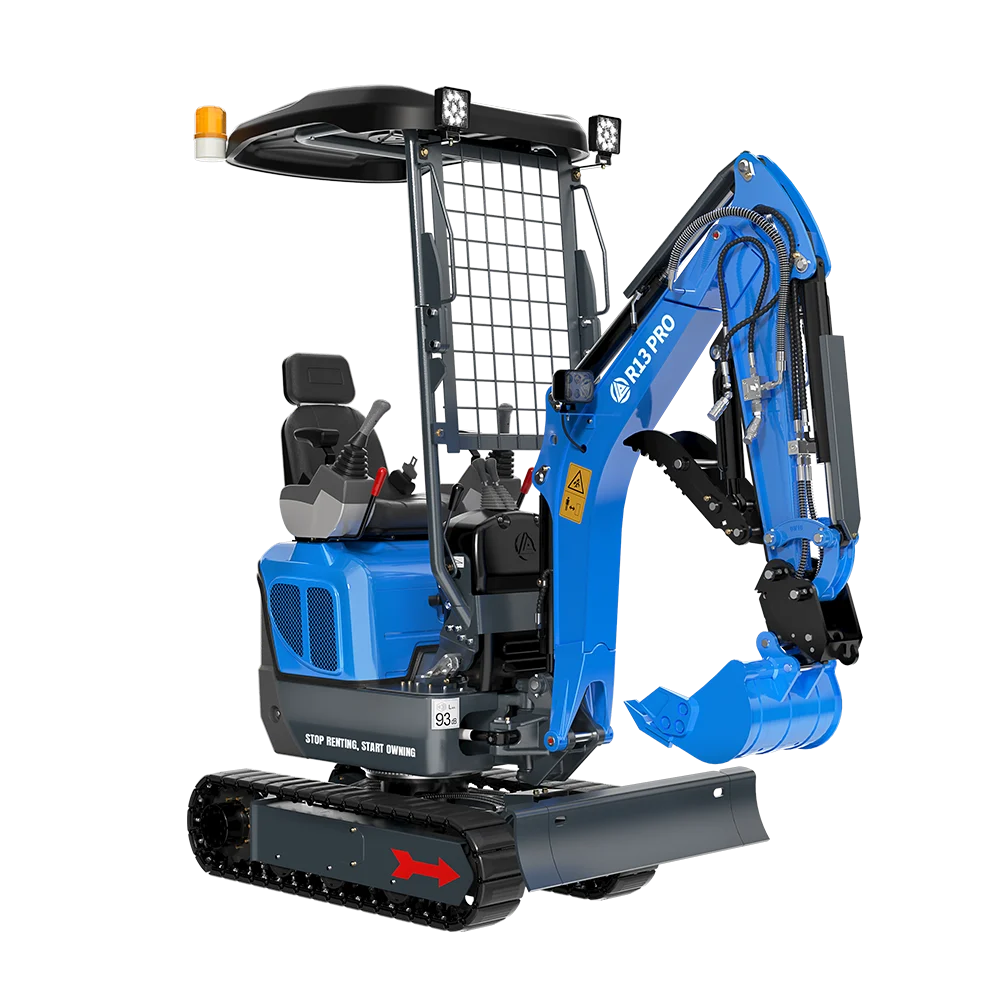
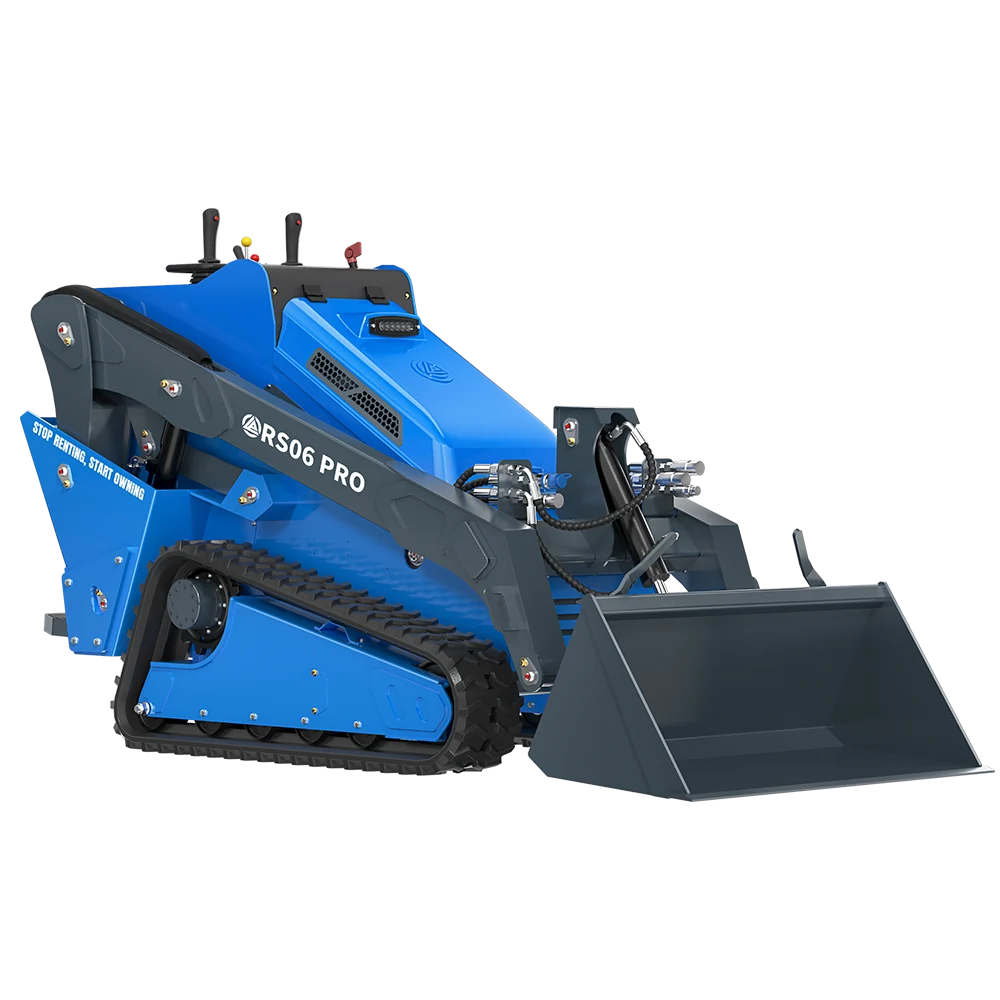
Similar size. Different geometry.
Both machines can move soil and run hydraulic attachments, but their strongest work happens in different directions. The excavator reaches and swings; the skid steer drives and lifts.
The excavator wins when the work is below ground.
Digging and trenching
The boom, dipper and bucket place the cutting edge below the tracks while the upper structure rotates independently. That geometry gives the operator depth, reach and placement control without driving through every part of the excavation. It is the natural fit for drains, service trenches, small footings, roots and digging beside existing structures.
A skid steer can trench or auger with the correct attachment, but the carrier usually works by driving into or along the cut. Attachment visibility, spoil placement, required depth and hydraulic demand decide whether that setup is practical. It does not become an excavator simply because a trencher or backhoe attachment pins on.
Decision: Choose the excavator when the job’s success is measured in depth, reach and careful placement. Choose a skid-steer trencher only when the cut is repetitive, the route is clear and the attachment-carrier combination is designed for it.
The skid steer wins when travel is part of every cycle.
Loading, carrying and grading
An excavator can load nearby material and shape ground with its bucket and blade, but it is inefficient when every cycle requires travelling to a distant pile or discharge point. Its strength is working within the boom and swing envelope.
A compact skid steer is built around repeated short travel: enter the pile, fill the bucket, reverse, turn, carry and place. The same movement supports cleanup and surface grading. Usable lift still depends on rated operating capacity, lift path, attachment weight, load centre and ground condition.
Decision: Choose the skid steer when the bucket needs to travel. If an excavator creates the spoil but the material must leave the swing area, pair it with a skid steer or dumper instead of making the excavator track back and forth.
The skid steer offers breadth; the excavator offers placement.
Attachments and hydraulics
Buckets, thumbs, breakers, augers and grapples benefit from the excavator’s reach and rotating upper structure. It can position a tool over a trench, beside a wall or around an obstacle without moving the undercarriage as often.
The compact skid steer usually supports a broader front-attachment workflow: buckets, forks, grapples, augers, trenchers, sweepers and other powered tools. That breadth is valuable only when the mounting plate, auxiliary flow, pressure, return, case drain, electrical connector, hose routing and attachment weight all match.
Decision: List the attachments before choosing the carrier. A tool that mounts physically but lacks the correct oil flow, controls or usable capacity is not compatible.
Measure the route and the working position—not just the gate.
Access, terrain and stability
A narrow excavator can pass through restricted access and work without turning the entire undercarriage, but tail swing, blade width, boom sweep and the digging envelope still need room. Tracked turns can disturb finished surfaces, and trench edges or grade changes require careful machine positioning.
A stand-on skid steer can be extremely compact and turn within a small space, yet short track geometry can react abruptly to steps, rocks and grade transitions. Load position and attachment weight also change stability. A successful one-time lift does not establish safe capacity.
Decision: Walk the route from unloading point to work area. Record width, height, turns, steps, slopes, soft shoulders, finished surfaces and the loaded exit path. Test representative terrain within the exact machine’s operating limits.
The easier machine depends on the work and the operator.
Controls and operator experience
Excavator controls coordinate boom, dipper, bucket, swing and travel. New operators need time to develop smooth combined movements and maintain awareness of the swing radius, trench edge and control pattern.
Skid-steer controls can feel direct and intuitive for loading, but a stand-on operator remains exposed to heat, dust, rain and machine movement. Carrying loads low, using the restraint or interlock, and avoiding abrupt turns are essential parts of the work.
Decision: Do not choose by a short unloaded demonstration. Test the actual work cycle long enough to judge control smoothness, visibility, heat, vibration and fatigue.
Support matters more than the paint colour.
Parts, maintenance and downtime
Pins, bushings, tracks, rollers, hoses, swing components and engine service parts all affect ownership. A simple engine does not compensate for undocumented hydraulic settings, missing safety parts or an unavailable track component.
The attachment system adds pumps, couplers, hoses, controls and high-wear interfaces to the support plan. Track tension, loader-arm supports, interlocks and hose routing require exact procedures and accessible documentation.
Decision: Before buying either class, identify the engine, pumps, valves, filters, belts, hoses, seals, electrical components and undercarriage parts. Mechanical ability reduces some downtime; it does not replace manuals, safety systems or obtainable parts.
Four buyer scenarios
The first machine should remove the repeated bottleneck.
A machine earns its keep through the work that returns every week or month. Use these patterns as a starting point, then replace them with your own measured workload.
Residential drainage contractor
Frequent drains, utility trenches and confined digging make the excavator the core machine. Rent or subcontract a skid steer when larger cleanup, grading or bulk movement is required.
Landscaper and hardscape crew
Material handling, grading, augering and multiple attachments create regular value. Rent an excavator for deeper drains, footings and root removal.
Property owner with mixed projects
One-off projects often exaggerate the value of whichever machine is needed first. Rent each class for a real job and measure hours spent digging versus loading and carrying.
Growing two-machine business
When one machine repeatedly waits for the other step, the second purchase can create a complete crew: excavator digging while a skid steer moves, grades and cleans up.
Ownership strategy
Own the frequent machine. Rent the occasional one.
If digging happens on nearly every job, the excavator should usually be available without scheduling a rental. If attachment work, loading and grading fill most working days, the skid steer is the stronger core machine. Rent the other class until its utilisation and scheduling cost justify ownership.
The two classes also form a productive pair. An excavator can continue digging while a skid steer removes spoil, brings bedding material, grades the surface and handles cleanup. The second machine becomes valuable when waiting between those steps is already costing labour or delaying completion.
When digging and carrying consume similar time, compare a two-machine workflow with the cost of extra labour, slower cycles and repeated attachment changes.
Capacity and safety
Compact does not mean forgiving.
Use the exact machine’s manual, load chart and approved attachments. Rated operating capacity, tipping load, breakout force and maximum lifting force are not interchangeable. Capacity also changes with reach, height, load centre, attachment weight, counterweight, slope and ground support.
- Keep people outside the excavator swing and skid-steer reversing zones
- Carry loader attachments low and follow the manufacturer’s slope procedure
- Protect trench and embankment edges from collapse and machine surcharge
- Confirm attachment locking and release stored hydraulic pressure before changing tools
- Use approved loader-arm or boom supports before working beneath raised equipment
- Test grade changes and obstacles slowly under competent supervision
Before ordering
Test the work cycle, not an unloaded machine.
A useful demonstration starts cold, reaches full operating temperature and uses the intended attachment and material. The seller or operator should not substitute a lighter load, easier surface or different configuration for the work you described.
Record the exact machine and serial plate throughout the test. A video reduces uncertainty, but it does not establish long-term durability, legal compliance or local parts support. An independent inspection provides stronger protection for a direct import.
- Cold start, warning lights and control interlocks
- Travel, steering and braking on representative ground
- Grade transitions approached slowly within the permitted limits
- Digging or loading with the actual bucket and material
- Lift at the required height, reach and load centre
- Simultaneous travel, lift and attachment functions
- Attachment locking, hose routing and hydraulic response
- Hot restart, leaks, cooling performance and operator heat exposure
- Service access to filters, grease points, battery and coolers
- Loading onto the intended trailer with rated ramps and tie-down access
A missing load chart, unidentified pump, incompatible attachment or unworkable access route is cheaper to discover before payment.
Final decision
Answer these questions before comparing prices.
Open each question to see what it means in practical terms and how the answer should influence your choice.
01Are most paid hours spent digging, or loading and travelling?
Map a typical job from arrival to cleanup and estimate the hours spent below ground, handling attachments, carrying material and grading. If digging controls the schedule, start with the excavator. If repeated loading and travel consume more time, the skid steer is usually the stronger core machine.
02What must happen below ground, and at what reach?
Record the required trench or footing depth, the horizontal distance from the tracks to the cut and where the spoil must be placed. An excavator is the natural choice when the machine must reach down, work beside an obstacle or place spoil without driving through the excavation.
03How far must soil, aggregate or debris move each cycle?
Measure the distance between the cut or pile and the discharge point. An excavator is productive while the material remains inside its boom and swing envelope. Once every cycle requires travelling across the site, a skid steer or dumper becomes the more efficient carrier.
04Which attachments will earn money often enough to justify them?
List the tools needed weekly or monthly—not attachments that may be used once. Frequent buckets, forks, grapples, sweepers, augers or trenchers favour a skid-steer workflow. Buckets, thumbs, breakers and tools needing reach or controlled placement may favour the excavator.
05Can the machine complete the entire access route and working envelope?
Measure the gate, overhead clearance, tightest turn, steepest grade break, softest shoulder and the room required to swing or lift the attachment. A machine that clears the opening but cannot turn, work or leave with the load does not fit the site.
06What does the exact load chart permit at the required height and reach?
Use the configuration-specific chart with the intended attachment, load centre and approved counterweight. Do not substitute breakout force, tipping load or maximum lifting force for usable rated capacity. If the supplier cannot provide the correct chart, the lift requirement remains unresolved.
07How do wet clay, finished surfaces, steps and slopes change the setup?
Treat each surface as a separate test. Compare track width, tread, ground pressure, clearance, machine balance and recovery options. Neither class is automatically better in mud, and both can disturb finished ground or become unstable at edges and grade transitions.
08Which parts, manuals and repair skills are available locally?
Identify filters, belts, hoses, seals, switches, track components, pumps, valves and engine parts before purchase. Confirm who can diagnose the machine and how long critical parts take to arrive. Mechanical skill helps, but it does not replace documentation or safety components.
09Which class will work regularly, and which can remain a rental?
Estimate productive days per month for each class and include transport, storage, maintenance and downtime. Own the machine that repeatedly removes the main bottleneck. Rent or subcontract the class used only for occasional specialised steps until its utilisation justifies a second purchase.
Useful owner reports
Longer-use examples include an 800-hour mini excavator used in commercial landscaping, an 80-hour compact skid-steer review and a 283-hour commercial MT100 review. These are individual configurations and operating contexts, not universal durability conclusions.